Guinea has very low rural electrification (30% of people have power) and is actively deploying renewable mini-grids to expand access. Aptech Africa engineered two ground-mounted solar PV systems in remote villages: a 10 kWp PV array with 20 kWh of battery storage in Bolodou, and a 48 kWp system with 58 kWh in Thianguel Bori. These centralized plants were designed to operate 24/7 (day and night) and include remote monitoring to log energy generation, consumption, and system alarms. By integrating solar with local hydro resources and a new distribution network, the project delivers reliable power to households, schools, and clinics in both towns.
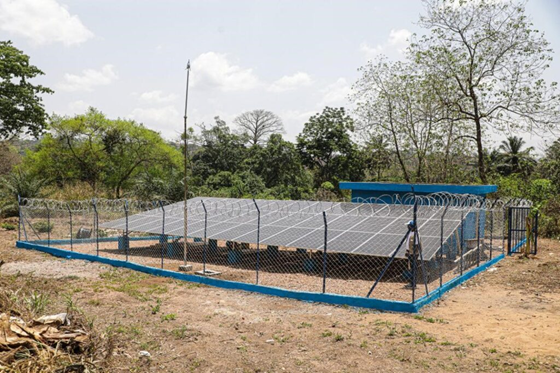
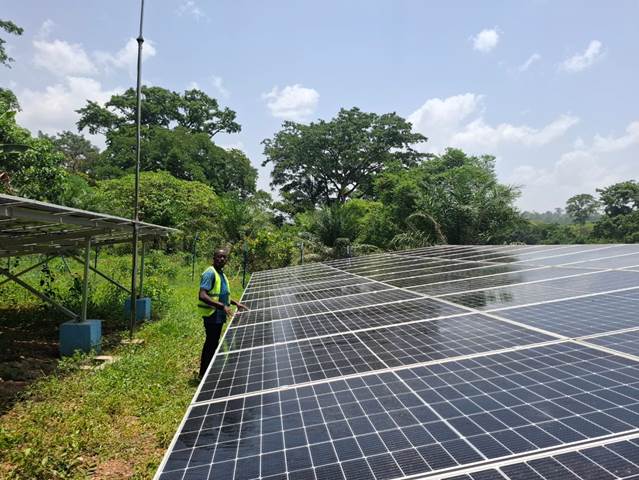
Figure: Ground-mounted solar PV array in Bolodou, Guinea.
This centralized mini-grid installation (10 kWp) features fixed-tilt solar panels on ground racks, surrounded by security fencing. A remote monitoring system connects to the inverters and battery bank to collect data on energy production, battery state, load consumption and system alarms. In Bolodou the solar plant is hybridized with an existing micro-hydro system: the PV output is AC-coupled into the hydroelectric grid, allowing excess solar power to flow into the local network when available. The 20 kWh battery ensures continuous power overnight or during cloudy periods.
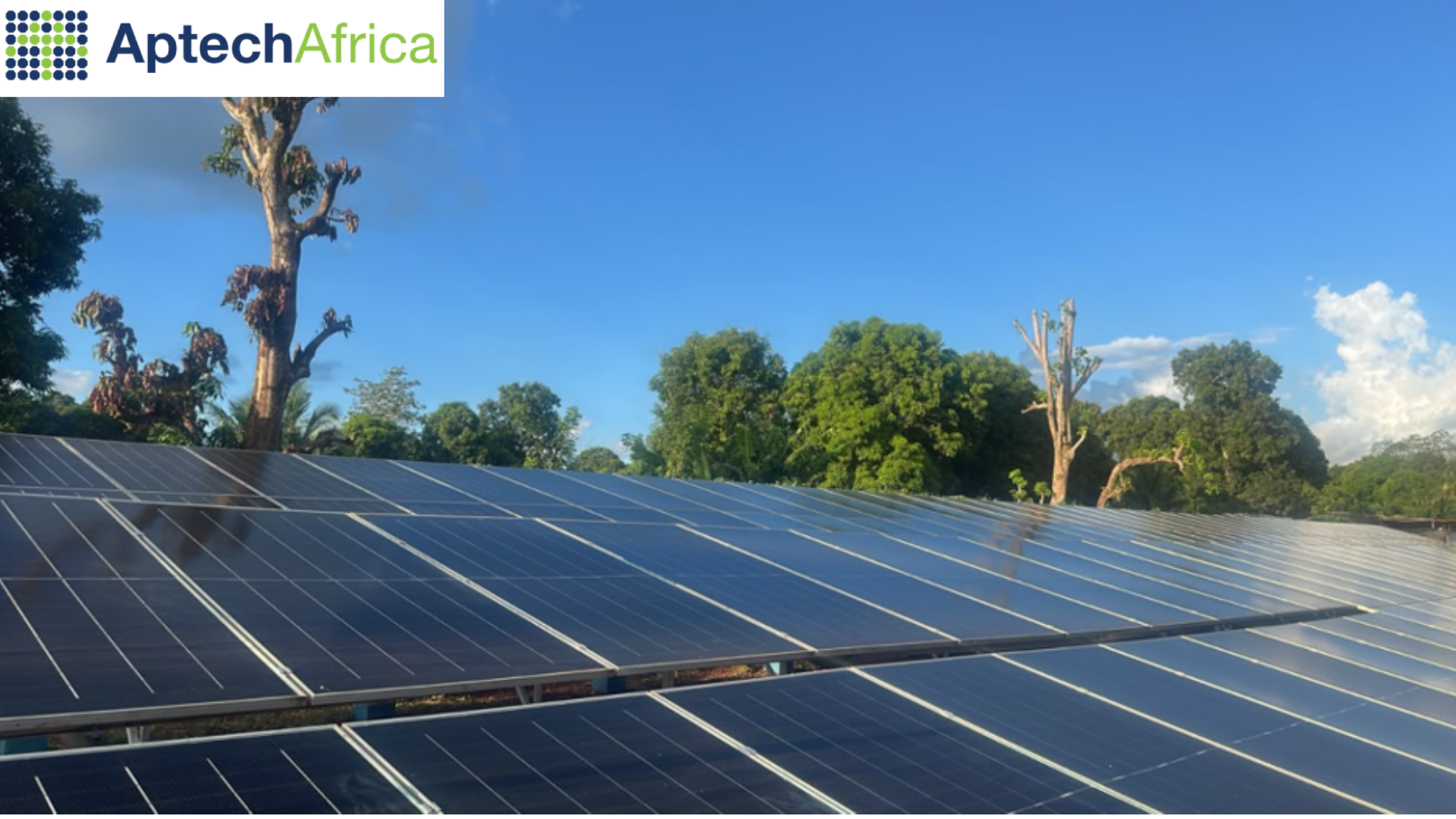
In Thianguel Bori, the off-grid mini-grid is larger (48 kWp PV with 58 kWh storage) and includes a new low-voltage distribution network for roughly 100 users. The PV field and battery bank supply DC power that is converted to AC by hybrid inverters. The installation uses both Fronius SYMO-20 inverters (20 kW each) and Victron Quattro inverters to manage PV output and battery charging. These inverters synchronize power flow, handle battery operation, and stabilize the micro-grid. During the day the PV array serves daytime loads directly and charges the batteries; at night the batteries discharge to maintain a steady supply. This arrangement eliminates the need for local diesel generators, reducing fuel costs and emissions.
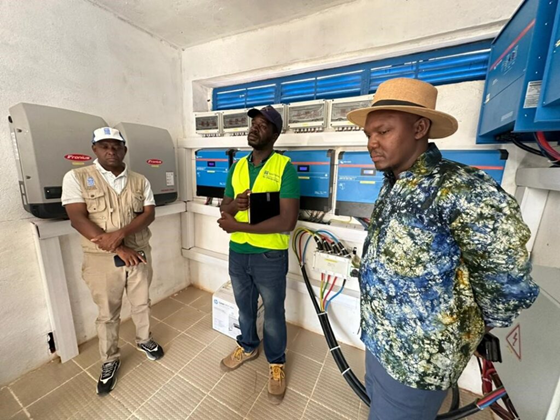
Figure: Inverter and battery control room (Victron and Fronius equipment).
The Victron unit regulates charge and can operate in island mode, while the Fronius enables grid-tying and sophisticated power management. Aptech Africa outfitted the site with these inverters, ensuring efficient, reliable conversion of solar and battery power. The Victron system also handles data logging: it records voltage, current and alarms even if Internet connectivity is intermittent.
Once installed, each mini-grid was integrated into local infrastructure. In Bolodou the PV system was tied into the micro-hydro plant’s AC bus, so that solar output can supplement or replace hydro generation. The local pico-hydro still provides energy when solar output is low, making the hybrid plant resilient year-round. In Thianguel Bori the system operates off-grid: Aptech built a new transformer and distribution lines to feed community buildings and homes. Remote monitoring hardware (Victron Cerbo or similar) continuously tracks system performance. It can transmit key metrics via the cellular network where available, or store data locally for technicians to download. This monitoring capability helps identify faults early (for example, detecting if a battery string fails) and ensures the plant performs as designed.
The project faced significant logistical challenges due to the remote locations. Both sites are far from paved roads and become very difficult to reach during the rainy season. Transporting heavy equipment (solar panels, steel racks, batteries) over rough terrain required careful planning. Additionally, the Bolodou site had no reliable internet, so Aptech technicians had to implement alternative communication solutions (such as 3G cellular links or manual data retrieval) to enable remote monitoring. Despite these obstacles, the skilled installation team completed construction and commissioning on schedule.
Benefits and Impact
- 24/7 Electricity Access: The mini-grids provide continuous power to the communities. By combining solar and storage (and hydro in Bolodou), the systems supply stable electricity day and night, dramatically improving the local power supply.
- Economic Growth: Reliable power enables income-generating activities and businesses. Local workshops (e.g. welding, carpentry, grain milling) can run equipment longer. Street lighting and refrigeration become possible, fostering small enterprises and productivity.
- Public Services: The systems power public facilities such as local government offices, clinics and schools. For example, rural health centers now have lighting and medical equipment running consistently, and schools can use computers or lights after dark. Aptech reports these benefits directly strengthen community services.
- Affordable Clean Energy: By using solar and hydro resources, the projects avoid costly diesel fuel. The hybrid design reduces greenhouse gas emissions and local air pollution. Moreover, as noted by Guinea’s rural electrification agency, such renewable projects can be deployed quickly (in ~6–7 months) and at moderate cost.
- Community Empowerment: Access to electricity improves quality of life – people can charge phones, enjoy lighting and entertainment, and entrepreneurs gain access to power tools. These social benefits reinforce the development impact of the project.
Stakeholders and Collaboration
- Aptech Africa (EPC Contractor): Aptech designed, supplied and installed the PV systems, batteries, inverters and monitoring equipment. As the main renewable energy provider, they handled all engineering, procurement and commissioning tasks.
- Local Governments and Communities: Regional and village officials in Lélouma (Thianguel Bori) and Guéckédou (Bolodou) facilitated logistics and are joint operators. The local residents (100+ users) participated in planning and now operate much of the distribution network under AGER guidance.
- Equipment Suppliers: Solar modules, batteries and inverters were sourced through Aptech’s partnerships. Notably, Victron Energy and Fronius provided the inverters, and Ulica (SolarUlica) or similar manufacturers supplied the PV panels.
In summary, the Bolodou and Thianguel Bori mini-grids conceived by Aptech Africa have delivered clean, reliable power to off-grid villages. These ground-mounted PV plants, hybridized with hydro (in Bolodou) and equipped with advanced monitoring, demonstrate how solar mini-grids can be tailored to local needs. As reported, they “bolster energy access for the population” and empower community development by electrifying schools and offices. This case proves the positive socio-economic impact of integrating renewable energy into rural Guinea.